

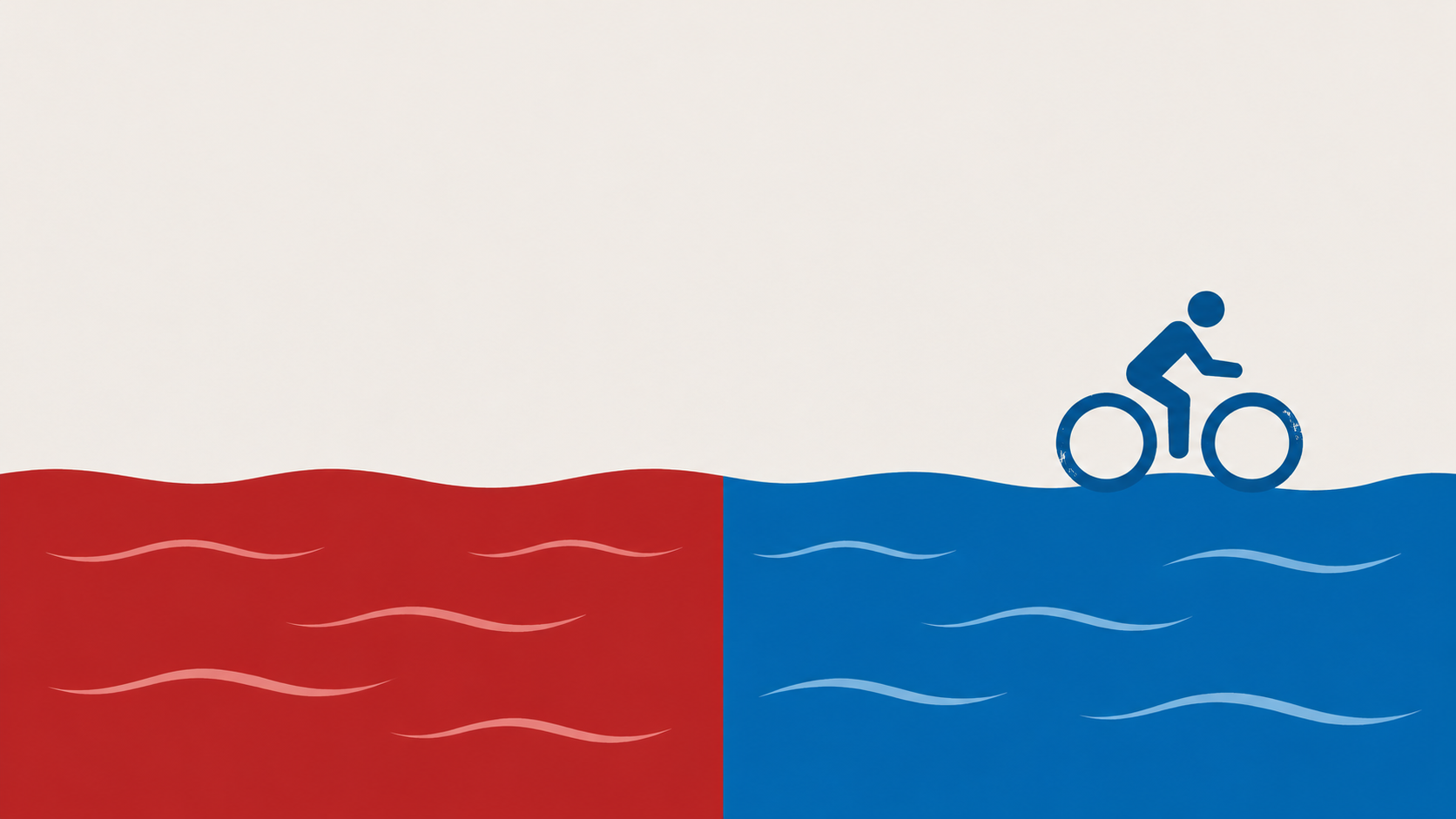
While manufacturers fight over the same customers, an enormous blue ocean of potential new cyclists sits almost completely ignored.
A press release from Pedego caught my attention this week. The company announced that it intends to offer its retailers protected territories, essentially promising not to open another dealer down the street after the first one has invested a bunch of money, time, and effort into building the brand. Imagine that. A bicycle brand recognizing that independent retailers might actually deserve some consideration before their supplier hands the same products to the competition. What a revolutionary concept. Somebody alert the business schools. Apparently treating your retail partners like actual partners is now considered an innovative business strategy.
The announcement struck a nerve because I’ve spent more than three decades working in the bicycle industry, and I’ve watched the relationship between manufacturers and independent retailers become increasingly dysfunctional. My shop, BikeBike, sold Gazelle bicycles for 15 years. Fifteen years of investing in inventory, introducing customers to the brand, providing test rides, and helping establish a market for bicycles most Calgarians couldn’t have identified when we started offering them. Then Gazelle’s parent company, PON, decided Calgary needed a bunch more Gazelle dealers. The first new door they opened just happened to be less than 1km away from us at the time. Then 2 years later – after I had submitted my pre-season order – they opened a another huge retailer, going from 1 door to 5 in less than 2 years. Our sales subsequently collapsed, sucking well over $100,000/year in sales away from us. I should have walked away from Gazelle years ago but loyalty to a brand we’ve been building for 15 years got the better of me. Around the same time this was going on, we experienced essentially a repeat with Surly. Our local rep decided – for reasons – to give Surly to a nearby shop and, predictably, our sales fell off a cliff. Another longstanding supplier relationship torpedoed. Trust, obliterated.
Thanks for your loyalty, don’t forget to place your preseason order before the deadline.
Now, before someone in a brand’s sales department starts furiously composing an email explaining how distribution works, let me be clear. I understand competition. I understand brands want to grow. And I understand that no retailer is entitled to own a brand or a geographic market indefinitely. What I don’t understand is why so many bicycle companies seem convinced that the best way to grow is to endlessly divide the same customers among more retailers, while doing less than nothing to increase the number of people actually riding bicycles.
The bicycle industry has become obsessed with getting a bigger slice of the pie, while apparently forgetting that somebody needs to bake a bigger fucking pie.
I happened across a book called The Blue Ocean Strategy many years ago and after reading it I never looked at the bike industry the same way again. If ever there was an industry desperately in need of understanding it, it’s the bicycle business. Basically, a red ocean is an existing market where companies fight tooth and nail over the same customers, competing on features, price, distribution, and increasingly marginal product improvements. Sound familiar? We’ve spent decades selling increasingly sophisticated and expensive bicycles to people who already own bicycles. We fight over drivetrain specifications, suspension travel, wheel sizes, OMG FUCKING WHEEL SIZES, and whether this year’s models are sufficiently different from last year’s to justify another $6,000 purchase. Meanwhile, millions of potential customers aren’t comparing electronic shifting systems or arguing about tire casings on Reddit. They’re wondering whether they can safely ride to work, whether their kids could ride to school without getting crushed under the wheels of lifted F-150, or whether cycling might be something they’d actually enjoy. That’s the blue ocean. People who aren’t choosing between MegaBrand X and MegaBrand Y because they haven’t even decided whether cycling is for them or if they might get run over and killed just trying. And what does our industry do? Introduce another $12,000 mountain bike with a new wheel size with all the cables running through the headset and open another dealership to sell it. Fucking brilliant. Galaxy brain stuff.
The truly maddening part is that reaching this blue ocean would require the supposed leaders of industry to stop thinking exclusively about innovating for the sake of it and start thinking about the people who might want to start riding bikes. The barriers preventing someone from becoming a cyclist have very little to do with whether Shimano has introduced another groupset or whether the latest carbon frame is 150 grams lighter. They’re about safety, affordability, convenience, confidence, and culture. Those are market-development problems, not product-development problems. Solving them would create opportunities for every manufacturer, distributor, and retailer in the country. Instead, brands continue pouring resources into fighting over the red ocean while the blue ocean sits there, largely unexplored, waiting for leaders of industry to give a shit.
And here’s something that should embarrass the hell out of leaders in Canadian bicycle business. We don’t have a strong, unified, properly funded Canadian bicycle industry association representing the collective economic interests of manufacturers, distributors, and retailers. One used to exist but it was allowed to fade away into nothing by these titans of Canadian bike industry. Yes, organizations like Vélo Canada Bikes do important advocacy work, and the American-based National Bicycle Dealers Association has recently made efforts to organize Canadian retailers. Good. We need more of that. But where is the powerful Canadian industry voice banging on the doors of governments demanding policies that make bicycles more affordable, accessible, and useful? Where is the coordinated lobbying for safe cycling networks, recreational trails, tax incentives for bicycle purchases, and the removal of unnecessary import duties? Where is the collective effort to position bicycles as a serious part of Canada’s transportation, recreation, tourism, and public health future? Where the hell is everybody?
Consider Canada’s bicycle import tariffs that has existed for decades, you know, pre-Trump. The standard tariff on conventional bicycles is 13%, although trade agreements provide exemptions for qualifying countries. We have a country supposedly concerned about affordability, traffic congestion, healthcare costs, and greenhouse gas emissions, yet maintain a tariff structure that can make one of the most efficient and affordable forms of transportation more expensive. Where is the industry’s coordinated campaign to change that? Where is the lobbying effort to remove sales taxes from bicycles or provide meaningful incentives for families who want to replace car trips with bike trips? Where are the brands putting serious money behind these initiatives instead of figuring out how to squeeze another retailer into an already well-served market?
And don’t get me started on infrastructure. The biggest opportunity for growing bicycle sales in Canada isn’t another flat black carbon fibre wonder-bike with electronic shifting and a 5-figure price tag. The biggest opportunity lies in making ordinary people feel safe riding very ordinary bicycles. It’s in building connected cycling networks, recreational trails, safe routes to schools, and making it possible to ride to the grocery store without feeling like you’re auditioning for the role of Furiosa in Mad Max FURY ROAD. Every person who feels safe enough to start riding represents a potential new customer. This isn’t complicated. Safe places to ride are quite literally the foundation of future bicycle sales, yet much of the advocacy work is left to underfunded organizations, volunteers, and individual retailers. Meanwhile, conservative politicians like Doug Ford in Ontario and Danielle Smith in Alberta are literally planning to rip out established bike lanes. The insanity is breathtaking.
At BikeBike, we’ve spent years promoting cycling as transportation, organizing group rides, promoting beginner-friendly adventures, sharing routes, and introducing people to the idea that a bicycle might improve their daily lives. Plenty of independent shops do similar work. We do it because we believe in bicycles, care about our communities, and yes, because creating more cyclists is good for business. The benefits extend to every shop and brand, whether they contribute to the effort or not. Funny how that works. Meanwhile, some of the biggest brands continue bigfooting their way around the retail landscape and ultimately reducing profitability for everyone. When a brand opens another dealer down the street, the existing retailer doesn’t get a reduction in rent, payroll, insurance, or inventory costs. They just get to sell fewer bicycles while paying the same bills. What a wonderfully creative business model.
There are alternatives that some brands employ. Brompton has maintained relatively limited distribution markets everywhere, including in Alberta, and our sales of its folding bicycles have remained remarkably predictable. Is that entirely because of its distribution strategy? Of course not. Brompton makes a distinctive product with a strong identity. But it demonstrates that you don’t necessarily need your products hanging above every second cash register to build a successful business. Sometimes having fewer committed, knowledgeable, financially healthy retailers is a better idea than spreading your products around like Halloween candy. And Pedego’s announcement, assuming the company follows through, suggests that at least some manufacturers recognize that protecting their retail partners might actually be good business.
What makes all of this so especially frustrating is that the opportunity staring the Canadian bike industry in the face is enormous, especially in the last many years as affordability concerns hit everyone in the pocketbook. Most Canadians don’t use bicycles for transportation, and many who might like to ride are discouraged by safety concerns, poor infrastructure, cost, or simply not knowing where to begin. That’s not a saturated market. That’s a market with enormous room to grow – think BIGGER PIE. But growing it requires cooperation, investment, trust, and long-term thinking rather than another round of discounting, dealer expansion, and motivational webinars about improving the customer experience. Maybe throw in a PowerPoint about maximizing synergies while you’re at it.
Here’s a thought. What if the largest bicycle brands operating in Canada took even a modest portion of their marketing budgets and collectively funded a serious national effort to grow cycling participation? What if manufacturers, distributors, and retailers built a properly resourced Canadian industry association capable of lobbying governments, collecting meaningful sales data, and advocating for policies that actually expand the market? What if success was measured not simply by how many bicycles MegBrand X sold compared with MegaBrand Y, but by how many more Canadians were riding this year compared with last or how increased ridership is affecting overall health outcomes and provincial healthcare budgets. I realize this would require companies that spend much of their time trying to eat each other’s lunch to actually cooperate. It might even require some executives to look beyond the next quarterly sales report or maybe rethink that new wheel size they’re going to introduce in the name of “innovation”. Terrifying stuff, I know.
After more than three decades in this business, I’m tired of watching independent retailers being told to innovate, differentiate, build community, and invest in their markets while some of the industry’s largest players seem primarily interested in redistributing the same pool of customers. I’m tired of an industry that talks endlessly about growth without seriously confronting what growth actually requires. And I’m particularly tired of seeing an enormous economic, health, environmental, and social opportunity squandered because we can’t organize ourselves well enough to advocate for our own future.
The bicycle industry doesn’t need another overpriced technological solution to a problem nobody was complaining about, or another round of corporate consolidation followed by a presentation explaining why everyone should be excited about the resulting synergies. It needs more people riding bicycles, safer places for them to ride, more affordable and accessible products, independent retailers who can actually make a living, and a coordinated Canadian industry voice capable of fighting for all of those things.
For fuck’s sake, people. Let’s bake a bigger pie.